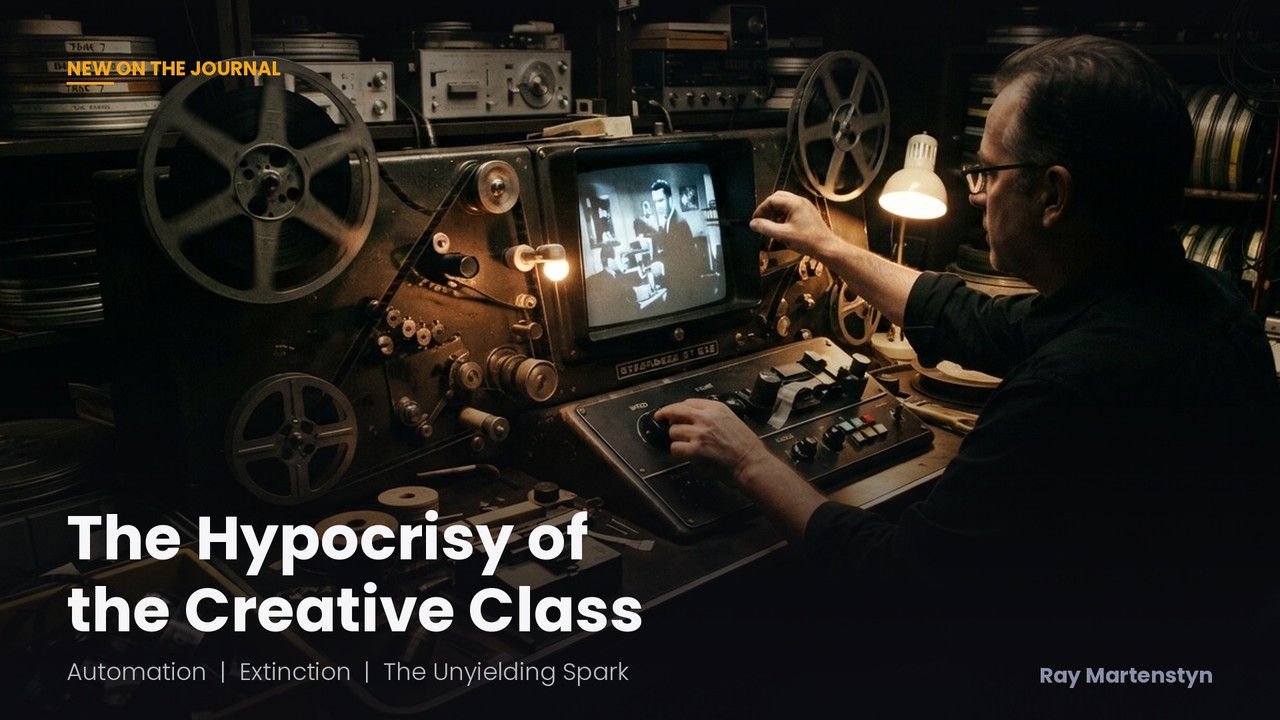
Before the NLE, editing was physical, irreversible, and heavy. Steenbeck flatbed pipeline, circa 1978.
By Ray Martenstyn
1. The Mechanical Heritage
Defending human labor against the tide of automation is a noble impulse. It is also historically blind.
Before the microchip, post-production was not an artistic sanctuary—it was industrial heavy manufacturing. You didn't render; you physically cut. You sat at humming Steenbeck and Moviola flatbeds, slicing 35mm celluloid with razor blades, taping frame lines together with guillotine splicers, and watching trim tails hang in felt-lined cloth bins. It was tactile, chemical, irreversible, and heavy.
An entire industrial military complex supported that single pipeline:
- Negative Cutters: Precision technicians working under microscopic magnifying lights with white cotton gloves, handling original camera negatives where a single dust speck or microscopic scratch meant permanent physical destruction of a multi-million-dollar shot.
- Mechanical Conformers & Loggers: Hand-writing latent edge codes, manually sync-marking magnetic sound tape to optical film prints, and managing physical vault inventories of thousands of metal film cans.
- Lab Technicians: Running continuous film processors through toxic chemical baths—developer, stop bath, fixer, bleach—balancing pH levels, chemistry temperatures, and bath replenishment rates to maintain density.
It was an army of specialized labor bound by physical laws and chemical toxicity.
Then the nonlinear editing timeline hit. The physical cut went digital. Overnight, that entire structural supply chain was rendered obsolete. A whole class of master technicians became ghosts in the workflow, their physical infrastructure liquidated for pennies on the dollar.
We are standing at that exact threshold today with generative AI.
The panic echoing through modern edit bays is identical. Creatives are paralyzed, terrified to step out of their operational comfort zones, fighting the machine because they falsely believe it replaces the maker.
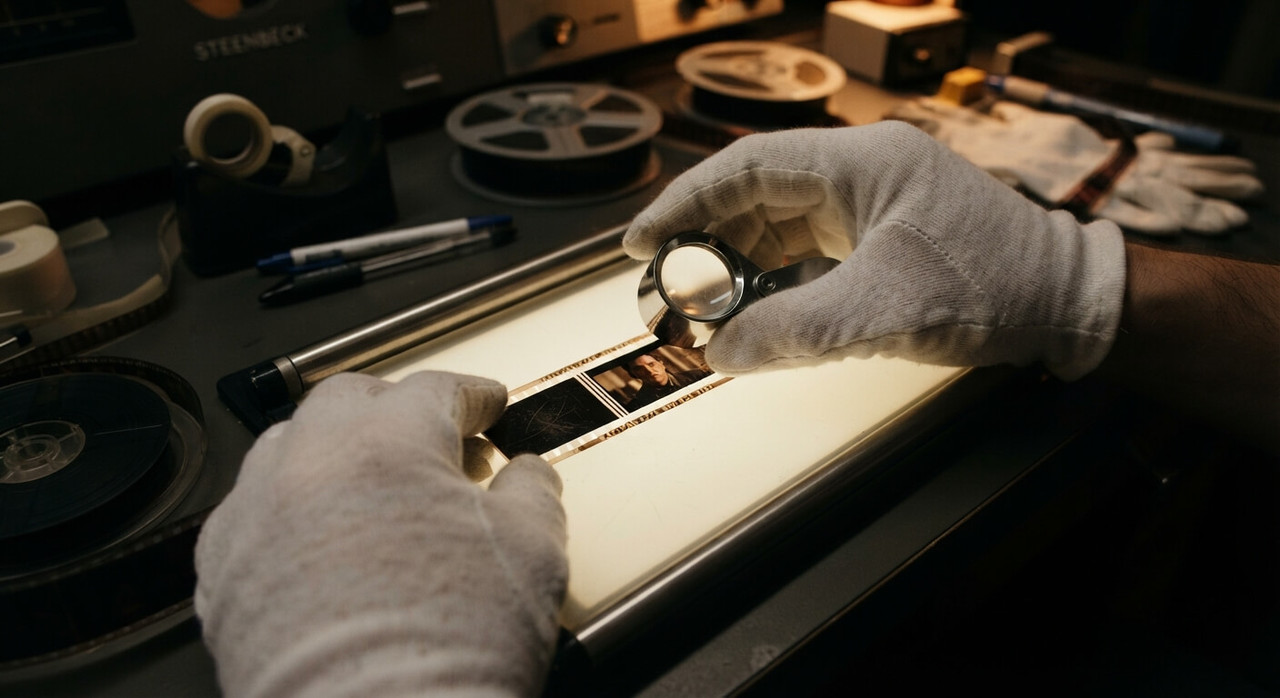
Negative cutting under high magnification. An entire class of manual labor rendered obsolete by desktop timeline architecture.
2. The Inconvenient Ancestry
Look closely at where you sit.
Every modern editor sitting in an air-conditioned suite, sipping cold brew, tapping Cmd+Z to instantly undo a mistake, is a direct beneficiary of a ruthless historical extinction event.
When early Avid Media Composer system racks and nonlinear editing suites entered post-production facilities in the late 1980s and early 1990s, they were not marketed as sacred artistic awakenings. They were sold as cold, uncompromising financial leverage. Studio executives ran the hard math: why pay an entire floor of physical lab technicians, negative cutters, and tape conformers when a single operator sitting behind a CRT monitor could ingest, cut, and audition a timeline in a fraction of the time?
Overnight, an entire generation of skilled craftspeople received pink slips. Decades of tactile muscle memory, master-level chemical handling, and optical mechanics were dismissed. Studio accountants reclassified their lifelong expertise as an unnecessary tax on the budget.
The modern editor’s job exists solely because those people were systematically displaced.
That is the inconvenient truth sitting at the core of today’s outrage. The very creative class now screaming into the void about AI taking their livelihoods is standing on ground built by the exact same mechanism. They embraced software that flattened a complex human supply chain into a single desktop application, celebrated the speed, pocketed the convenience, and called it progress.
Now that the automated tide has reached their desk, the narrative suddenly shifts to a moral crisis.
It isn't a moral crisis. It's history repeating its rhythm. The software operator of today is simply realizing they were never the final destination of technological evolution—they were just a comfortable pit stop.

3. The Primacy of Imagination
The primary fear has always been that the machine will replace the artist. That argument fundamentally misunderstands what a tool actually does.
Technology does not create vision; it merely collapses the distance between a thought and its physical realization.
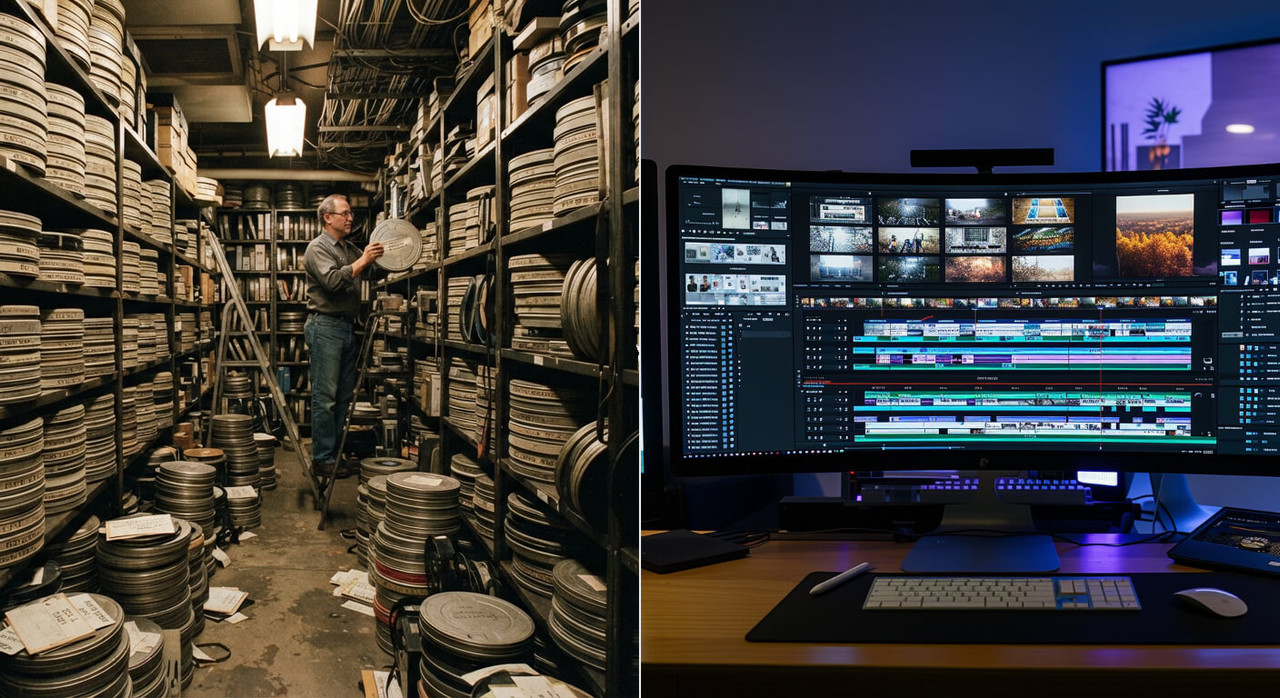
From multi-floor physical asset warehousing to single-prompt execution. The evolution of render latency.
When celluloid dissolved into digital NLEs, it didn't kill cinema. It stripped away the physical latency of chemical processing, film shipping, and optical printing houses. It freed the filmmaker to experiment at the speed of thought. What used to take a team of lab technicians three days to physically conform and optical-print for a test screening could suddenly be auditioned on a digital timeline in three seconds.
The physical labor shrank, but the creative burden didn't shift to the software—it condensed entirely onto the person steering it.
Generative AI is simply the next reduction of friction.
It is not an executioner coming for the human element; it is a high-yield amplifier built for the individual artist. The objective of advancing technology has never been to eliminate human artistry, but to strip away technical noise until only pure imagination remains.
When you remove technical overhead and render latency, the room gets quiet. You are no longer judged by the size of your budget, the depth of your technical crew, or your muscle-memory mastery of complex software submenus. You are judged strictly on the raw power of your ideas, your taste, and your vision.
The machine can generate infinite iterations, but it possesses zero taste, zero lived human experience, and no soul to decide which iteration matters. It requires a driver holding the wheel.
As the technical middle work evaporates, the process narrows to a single, unyielding focal point: one human artist, standing at the center, holding the spark.
4. The New Paradigm
We are not watching the death of art; we are watching the death of technical bottlenecking.
The physical editors of the celluloid era were masters of their craft, but execution was bound by the laws of physics, chemical processing times, and industrial machinery. The digital editors who followed unlocked operational speed, but remained tethered to complex software suites, manual masking, rotoscoping, and technical middle steps.
AI does not replace the spark—it clears the runway.
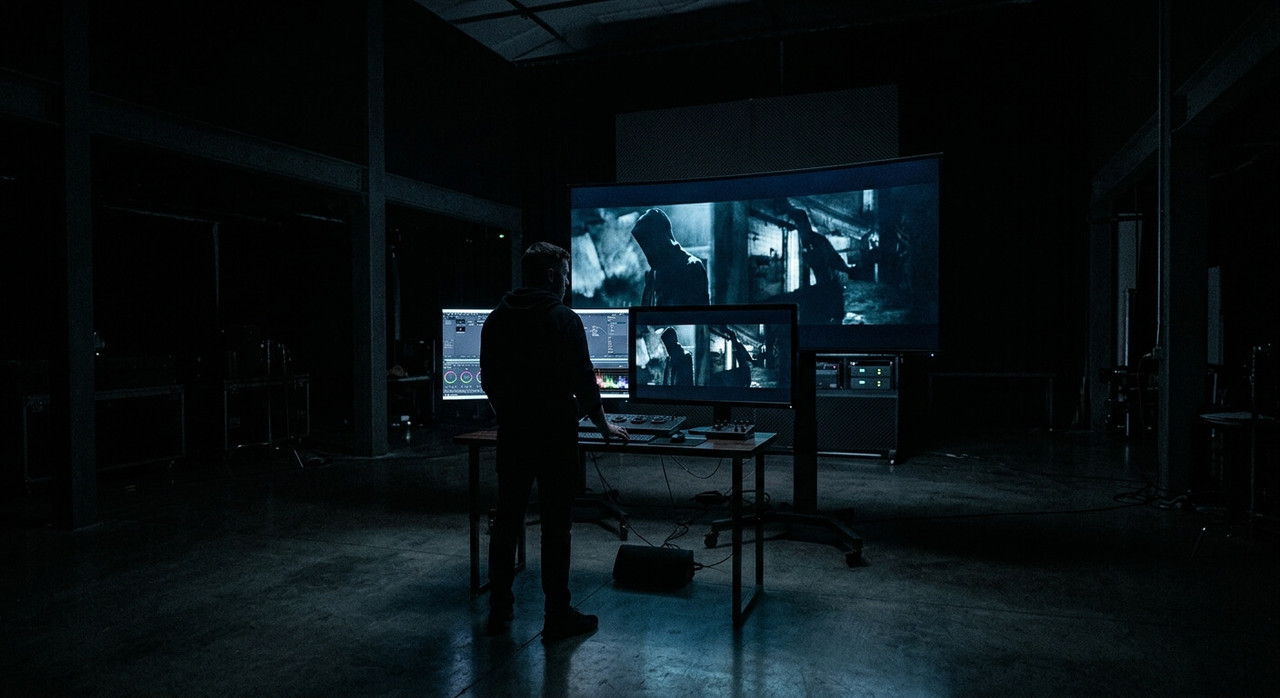
Strip away the crew, the budget, and the middle work. Only taste and vision remain.
The artists who survive this transition will not be the ones hiding behind union picket lines or praying for the clock to turn back. They will be the ones who recognize that the machine is just a canvas that draws faster.
The tools mutate. The workflows vanish. The middle work evaporates.
What remains is the only thing that ever mattered: the vision of the individual human mind.